Spring is just around the corner-more light, more movement, more time outside. And yet, many people feel more tired than energized at this time of year. Especially if you eat a vegan or mostly plant-based diet, one question quickly comes up: Which plant-based supplements really boost energy right now-and which ones can you skip?
The German Nutrition Society (DGE) considers a purely plant-based diet possible and beneficial for health, provided that critical nutrients-especially vitamin B12-are sufficiently covered through food and supplements. Vitamin B12 is regarded as the most important critical nutrient in this context[1]. For many vegans, targeted supplementation is therefore part of everyday life.
This shopping guide is for you if you
- live vegan or mostly plant-based
- want more energy, focus, and performance in spring
- value quality, transparency, and tested products
- no longer want to struggle through the supplement jungle on your own
Quick Picks: Best Vegan Power Supplements by Goal
For everyone short on time, here is the quick recommendation:
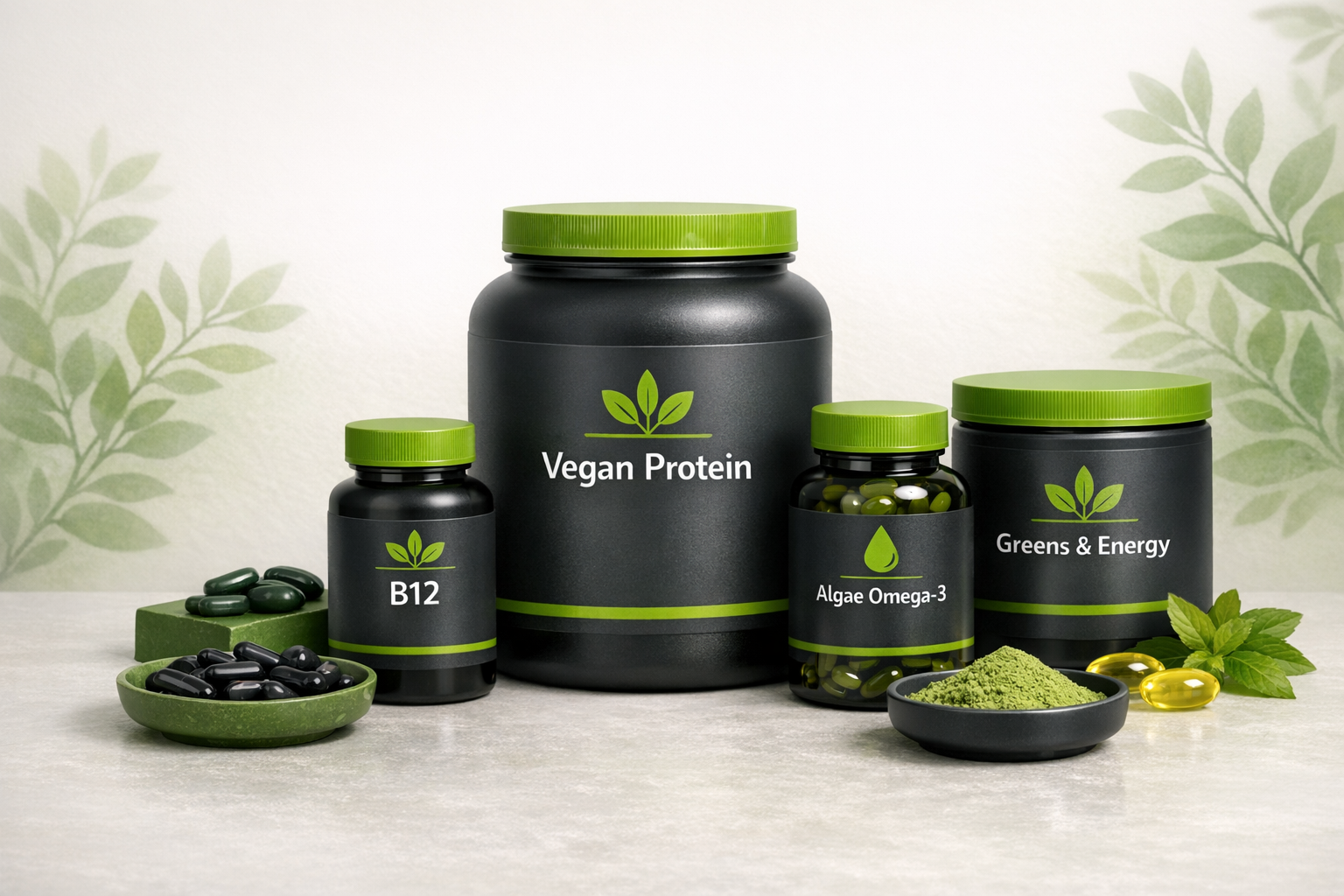
Vegan basics (non-negotiable)
-> Vegan vitamin B12 supplement (can be part of a B-complex)-key for nerves, energy metabolism, and blood formation.Power for brain and heart
-> Omega-3 from algae oil (DHA/EPA)-the plant-based alternative to fish oil.For active people and athletes
-> Vegan protein powder (e.g., pea, rice, hemp, soy)-an easy way to get enough protein if you train a lot or eat little solid food.Practical all-in-one solution for beginners:
-> Vegan multi-nutrient supplements with B12 and other critical nutrients (e.g., vitamin D, iodine, selenium, zinc).Extra plant power for spring energy
-> Greens and energy complexes with B vitamins, magnesium, and plant extracts, e.g., as organic greens powder.
In the following, we look at these categories in more detail-their pros and cons, ideal uses, and typical price range.
What to Look for in Vegan Energy Supplements
1. Know your needs (and ideally test them)
Certain nutrients are considered critical on a vegan diet: These include vitamin B12, vitamin D, long-chain omega-3 fatty acids (EPA/DHA), iron, zinc, iodine, and selenium[1].
Consumer organizations recommend that vegans have blood levels of critical nutrients-especially vitamin B12-checked at least once a year[2]. This allows you to supplement in a targeted way instead of guessing.
Important:
- If you experience persistent fatigue, concentration problems, or decreased performance, have a doctor check whether a nutrient deficiency is present.
- When in doubt, clarify dosages with a doctor or therapist.
2. Quality, purity, and certifications
With plant-based supplements, it is worth taking a close look at quality:
- Manufacturing and raw materials: Check the place of production and quality standards.
- Laboratory testing: Analysis for active ingredient content and contaminants.
- Transparency: Are all ingredients and dosages clearly listed?
- Certificates: Vegan and organic labels, and where relevant, sports certifications such as the Cologne List®.
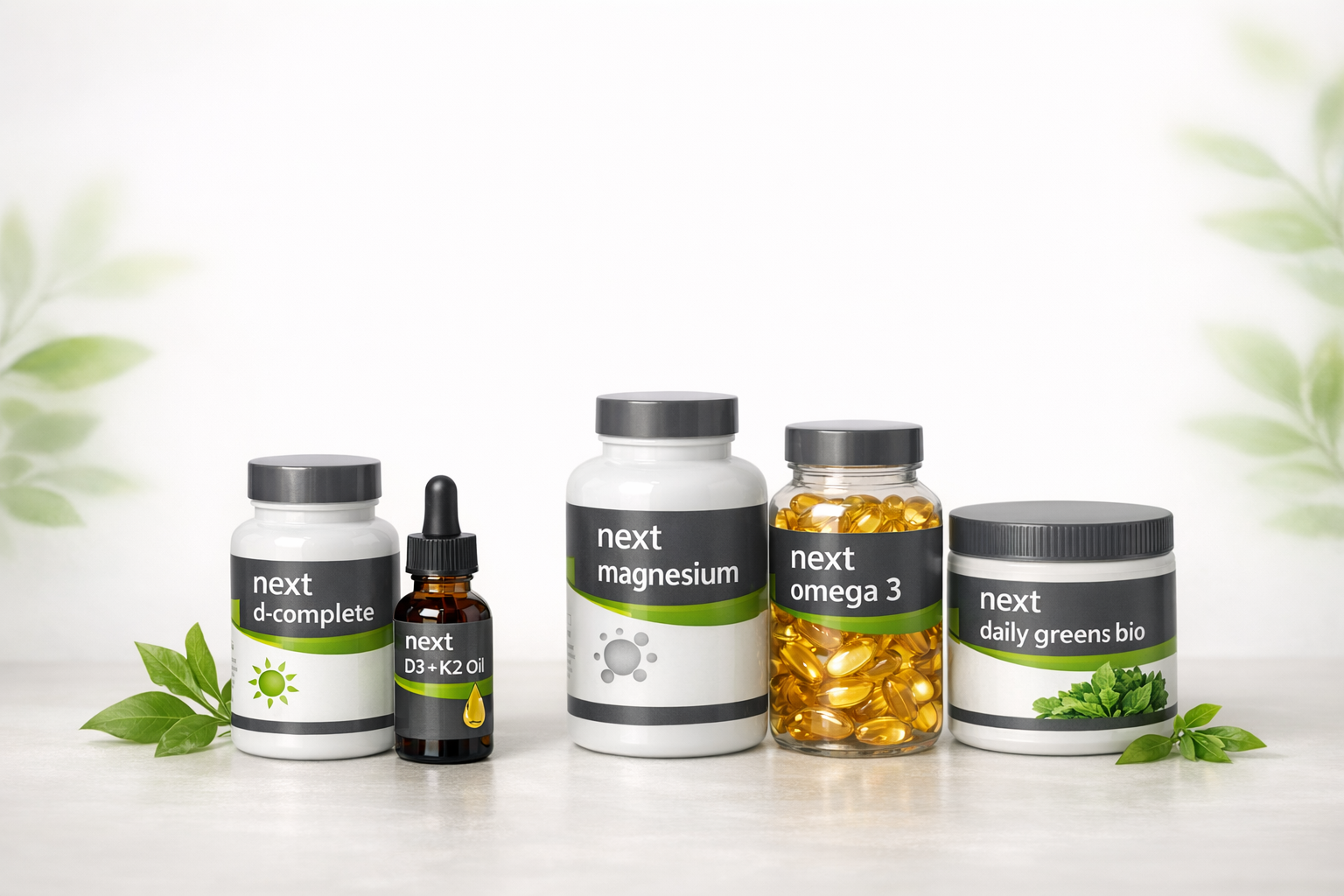
nextvital sets high standards here: The products are developed and manufactured in Germany, every batch is tested in independent laboratories beyond the standard requirements, and many products are listed on the Cologne List® for tested supplements. Capsule shells are made from plant cellulose, and all formulas are free from gluten, lactose, magnesium stearate, and preservatives-important if you want vegan supplements with minimally processed ingredients.
3. Format and everyday practicality
Choose what fits smoothly into your daily routine:
- Capsules/tablets: convenient and easy to dose, also on the go or at the office.
- Drops/oils: ideal for fat-soluble nutrients (e.g., vitamin D, omega-3).
- Powders: flexible for smoothies, bowls, or shakes-perfect for protein and greens.
If you are taking something regularly, taste and ease of use are often more important than squeezing out the last one percent of optimization.
4. Price and transparency
Prices range from inexpensive single-nutrient products to complex premium formulas. Check:
- How many daily servings does the pack contain?
- What is the monthly cost?
- Does the ratio of price, dosage, and quality (lab testing, certifications, made in Germany) make sense?
The Most Important Vegan Power Supplements in Detail
1. Vegan vitamin B12 / B-complex
Vitamin B12 is essential for blood formation, the nervous system, and energy metabolism-animal sources are virtually absent in a vegan diet.
The DGE recommends 4 µg of vitamin B12 per day for adults[3], and professional bodies consider unsupplemented vegans at high risk of deficiency[4].
What to look for when buying
- Clearly stated amount per daily dose (e.g., 100-500 µg; always align dosage with a health professional).
- Stable forms such as cyanocobalamin or methylcobalamin.
- As few additives as possible; prefer vegan capsules or drops.
Pros
- Covers the biggest nutrient gap in a vegan diet.
- Supports nerve function and energy.
Cons
- A non-negotiable supplement for vegans-doing without it is a health risk.
Best suited for
- Anyone eating a vegan diet.
Price range
- Usually low to moderate; many products cost in the low double-digit euro range per month.
2. Vegan omega-3 from algae oil (DHA/EPA)
Plant oils like flaxseed oil provide ALA, but the body can only convert a limited amount into the crucial fatty acids DHA and EPA. These are important for heart health, brain function, and inflammation balance. Only a small portion of ALA taken in is converted into EPA and DHA[5].
Example: next omega from nextvital provides 150 mg DHA and 75 mg EPA per daily dose.
What to look for when buying
- DHA and EPA content per daily dose (not just "total omega-3").
- Source of the algae oil and testing for contaminants.
- Neutral taste and good tolerance.
Pros
- Omega-3 supply without fish.
- Makes sense if you rarely eat fish or face high mental or athletic demands.
Cons
- More expensive than standard plant oils.
- Taste or fishy burps can be an issue (it is worth trying both capsules and oil).
Best suited for
- Vegans who want to specifically improve their omega-3 (DHA/EPA) status.
- People with high mental workloads or doing a lot of endurance sports.
Price range
- Mid to higher segment; quality algae oils are usually in the mid double-digit euro range per month.
3. Vegan protein powder
Protein is vital for muscles, the immune system, and recovery. The DGE recommends 0.8 g of protein per kilogram of body weight per day, and 1.0 g/kg from age 65[6]. Exercise further increases requirements[7].
You can usually cover your needs well through legumes, tofu, tempeh, nuts, and seeds. Vegan protein powder (e.g., pea, rice, hemp, soy, or blends) makes things more convenient-ideal for shakes or as a quick option when you are out and about.
What to look for when buying
- Protein content per 100 g and per serving.
- Amino acid profile (combinations such as pea + rice or soy offer a complete profile).
- Low sugar, minimal flavorings, and few additives.
Pros
- Easy protein intake if you train a lot or have a small appetite.
- Flexible use (shakes, porridge, baking).
Cons
- Not essential if your diet is well balanced.
- Taste and texture are very individual.
Best suited for
- Very active vegans.
- People with low appetite or working on building muscle.
Price range
- Moderate; typically in the low to mid double-digit range, depending on how much you consume.
4. Vegan multi-nutrient supplements
Multi-nutrient formulas bundle several critical nutrients-e.g., B12, D, iodine, zinc, selenium, sometimes omega-3. Professional resources often recommend them for vegans to help close nutrient gaps[8].
What to look for when buying
- Specifically formulated for vegans and clearly labeled as such.
- Balanced dosages (no megadoses or unnecessary overdosing).
- Transparent list of all ingredients, vegan capsules.
Pros
- "All essentials in one product"-great for beginners.
- Replaces multiple single supplements.
Cons
- Less room for individual fine-tuning.
- Not every blend suits every blood profile.
Best suited for
- New vegans who want simple baseline coverage.
- People who prefer using as few products as possible.
Price range
- Monthly costs usually in the mid double-digit range.
5. Plant-based energy complexes and greens
This includes organic greens powders with vegetables, herbs, and algae, as well as complexes combining B vitamins, magnesium, and plant extracts (e.g., rhodiola, ginseng). The focus here is general energy and vitality rather than correcting one specific deficiency.
At nextvital you will find organic powders such as next daily greens bio and complex formulas, for example with amino acids and B vitamins. next amino contains vitamin B3 (niacin), among others; according to approved health claims, niacin contributes to normal energy metabolism and helps reduce tiredness and fatigue.
What to look for when buying
- Clear listing of all plant extracts and vitamins.
- Dosages aligned with health-claim standards.
- As few additives as possible.
Pros
- Holistic approach: micronutrients plus plant actives.
- Supports vitality and that spring-in-your-step feeling.
Cons
- Effects are harder to measure (unlike, say, B12 levels).
- Quality and composition vary widely between products.
Best suited for
- Vegans looking for a qualitative boost on top of basic coverage.
- Anyone wanting an extra vitality boost in spring.
Price range
- Varies; usually mid to higher segment, depending on complexity and organic quality.
Comparison Table: Vegan Power Categories at a Glance
| Category | Main benefit in spring | Ideal for | Typical formats | Quality focus | Price range* |
|---|---|---|---|---|---|
| Vitamin B12 / B-complex | Foundational coverage, nerves, energy | All vegans | Tablets, capsules, drops | Stable B12 form, clear dosage, vegan format | € - €€ |
| Omega-3 from algae oil (DHA/EPA) | Brain, heart, inflammation balance | Vegans with a performance focus | Capsules, oil | Tested algae oil, DHA/EPA content, lab checks | €€ - €€€ |
| Vegan protein powder | Muscle building, recovery | Active people, frequent exercisers | Powder | Amino acid profile, minimal additives | €€ |
| Vegan multi-nutrient supplements | Baseline coverage of critical nutrients | New vegans, busy individuals | Capsules, tablets | Formulated for vegans, full transparency | €€ - €€€ |
| Energy complexes and greens | Vitality, micronutrient boost | Optimizers | Powder, capsules | Organic quality, solid science-based dosages | €€€ |
*Price range: € = low, €€ = medium, €€€ = higher; exact prices vary by brand, quality, and dosage.
How nextvital Helps You Get "Fit for Spring"
nextvital combines lab-tested supplements made in Germany with personal guidance-exactly what many health-conscious vegans are looking for.
- For omega-3, next omega offers a vegan algae oil with clearly stated DHA/EPA amounts.
- For performance and energy, there are complex formulas such as next amino with niacin to support energy metabolism.
- The quick check up offers a structured online initial consultation with experienced experts on topics such as energy, gut health, or hormones.
This way you can complement your plant-based diet in a targeted way-with a focus on quality, safety, and effective dosages.
Conclusion: Start Spring with a Plan and Plant Power
You do not need a long list of products to feel more energized in spring. What matters is:
- Solid vegan basics (B12, and where appropriate D and omega-3)
- Carefully chosen power add-ons (protein, multi-nutrients, greens) that match your lifestyle
- High quality standards (lab testing, made in Germany, transparency) and, ideally, professional advice
With these pillars in place, it becomes clear: a vegan diet and strong energy levels go hand in hand-the right supplementation makes the difference.
FAQ: Common Questions About Vegan Energy Supplements
Do I always need a vitamin B12 supplement as a vegan?
Yes. It is practically impossible to get enough vitamin B12 from food alone on a vegan diet. Professional organizations consider vitamin B12 the most critical nutrient in a vegan diet and recommend reliable supplementation[1]. Discuss form and dosage with a health professional and have your blood levels checked regularly.
Is more flaxseed oil enough instead of algae oil?
Flaxseed oil is healthy and does provide ALA. However, conversion of ALA into DHA and EPA is limited[9]. For targeted DHA/EPA coverage, vegan algae oil is usually the more reliable option.
Are vegan protein powders a must if I am active in sports?
Not necessarily. Basic needs are about 0.8 g/kg body weight, and more if you train a lot[6]. If you comfortably reach this through legumes, tofu, and similar foods, you do not need powder. If you struggle to get enough or train very intensely, protein powder can be helpful-especially in spring when training often ramps up.
How can I recognize a good vegan supplement?
Look for:
- Transparent labeling of all ingredients and dosages
- Vegan capsules and a purely plant-based formula
- Lab testing for purity and active ingredient content
- Dosages aligned with current professional standards (no extreme values)
- For athletes: certifications such as the Cologne List®
Should I always have blood work done before taking supplements?
For vitamin B12, at least an annual check is recommended[2]. If you have persistent fatigue, concentration problems, or other symptoms, more comprehensive lab work (including iron, vitamin D, thyroid function) is advisable. Seek medical advice first, then supplement in a targeted way. Supplements do not replace diagnosis or treatment, but they can provide meaningful support.