Spring is the perfect time to refresh your morning routine: more daylight, more movement - and more energy. In this practical guide from Praxiswissen Gesundheit, you'll learn how a healthy breakfast and carefully chosen supplements can boost your morning energy and vitality throughout the day - without complicated diets.
Studies show that a breakfast with complex carbohydrates, protein, and healthy fats can support mental performance and concentration in the morning hours[1]
You'll get:
- simple breakfast ideas for every day
- 3 versatile breakfast recipes as blueprints
- an overview of which supplements can make sense in the morning
- tips on how to create your personal "Fit for Spring" routine
Requirements: What you need before you start
Before you begin, check:
- Time window: 10-15 minutes in the morning or a bit of prep the evening before
- Equipment:
- cutting board, knife
- small pot or microwave
- bowl, glass, or to-go cup
- Food:
- oats or other whole grains
- eggs, yogurt, quark or plant-based alternatives
- fresh or frozen fruit, some vegetables
- nuts, seeds (e.g. flaxseed, chia, sunflower seeds)
- Health:
- If you have chronic conditions, take medication, are pregnant or breastfeeding, always check supplements in advance with your doctor or therapist.
Important: Supplements do not replace a balanced diet or medical treatment.
Step 1: Building blocks of a healthy breakfast
The 4 building blocks for long-lasting energy
An ideal healthy breakfast that truly sets you up for the morning is made up of:
Protein e.g. yogurt, quark, egg, cottage cheese, tofu, protein powder
More protein in the morning can reduce cravings and keep you full for hours[2]
Complex carbohydrates e.g. oats, wholegrain bread, quinoa
Healthy fats e.g. nuts, seeds, nut butter, avocado
Fiber from whole grains, fruit, vegetables, legumes, seeds
Fiber from whole grains, fruit, and seeds supports stable blood sugar and long-lasting satiety[3]
What this looks like on your plate
Instead of white rolls with jam (lots of sugar, little satiety), choose combinations like:
- wholegrain bread + hummus + cucumber + egg
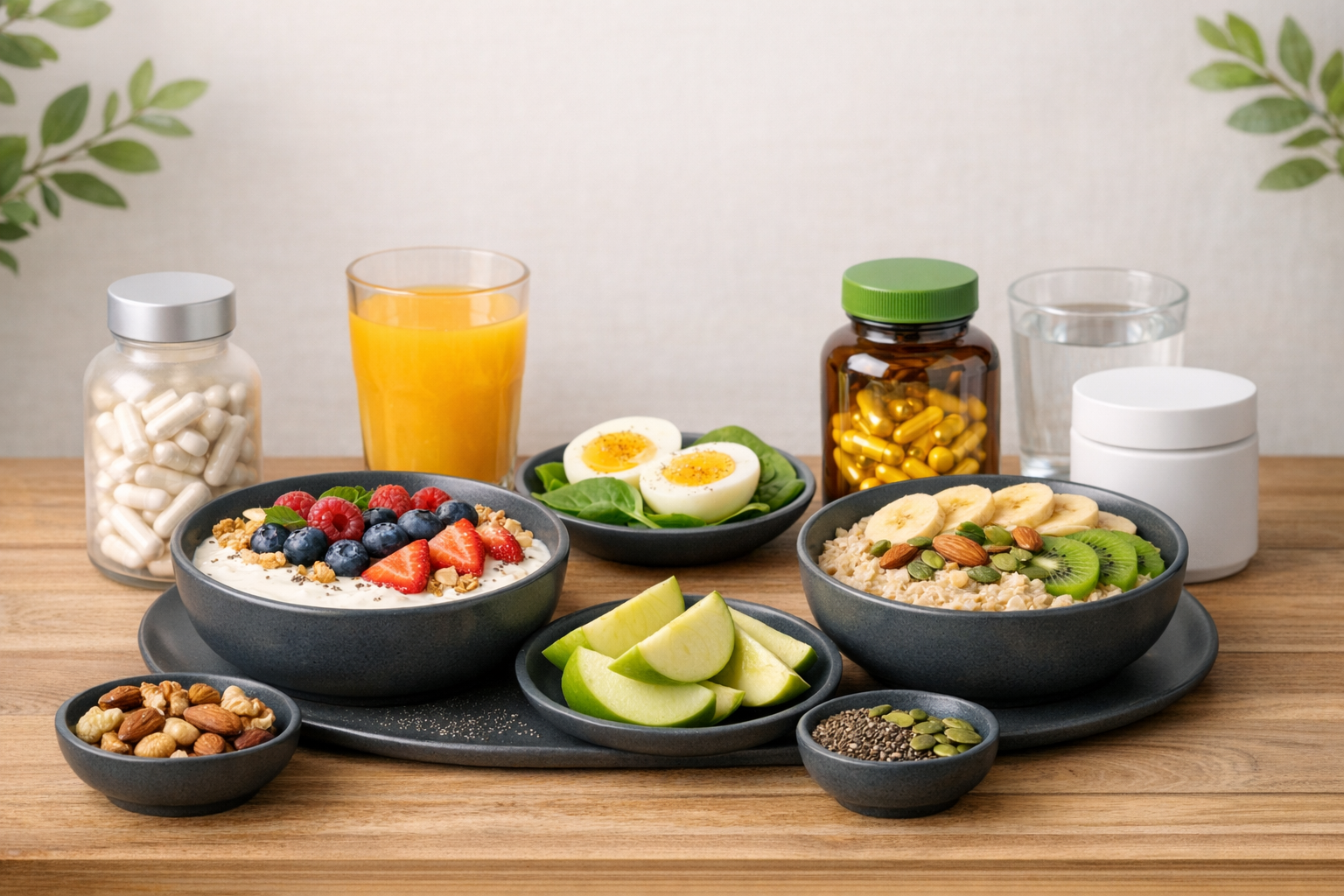
- porridge with oats, berries, and nuts
- yogurt or skyr with fruit, seeds, and oats
Tip: Do you feel tired again 1-2 hours after breakfast? Check whether your breakfast contained enough protein and fiber.
Step 2: Choose your breakfast type - 3 simple ideas
In spring, you don't need anything complicated. Pick one option that fits your daily routine and simply rotate the ingredients.
1. Savory power bread (5-10 minutes)
Perfect if you prefer savory foods.
You need:
- 2 slices of wholegrain bread
- 1-2 eggs (boiled or scrambled) or hummus / cottage cheese
- 1 handful of raw vegetables (e.g. tomatoes, cucumber, bell pepper, radishes)
- 1-2 tsp olive oil or some avocado
How to make it:
- Toast the bread or use it fresh.
- Top with egg, cottage cheese, or hummus.
- Garnish with vegetables and a little oil or avocado.
Why it works: Protein, whole grains, and vegetables supply you with energy and plenty of micronutrients.
Common mistake: Just bread and butter - it lacks protein and fiber, which can quickly lead to cravings.
2. Overnight oats / porridge (for prepping ahead)
Ideal if you're short on time in the morning.
You need (per serving):
- 40-60 g oats
- 150-200 ml milk or plant drink
- 2-3 tbsp yogurt or quark (or skyr)
- 1 handful of berries (fresh or frozen)
- 1 tbsp nuts or seeds
Overnight oats version:
- Put everything into a jar in the evening and mix.
- Chill in the fridge overnight.
- Add a bit more liquid in the morning if needed.
Porridge version:
- Briefly cook oats with liquid (pot/microwave).
- Stir in yogurt/quark and toppings.
3. Spring smoothie bowl (light & refreshing)
Ideal on warmer days or when you prefer something light in the morning.
You need:
- 1 banana (fresh or frozen)
- 1 handful of berries or other fruit
- 150-200 g yogurt or a plant-based alternative
- 2-3 tbsp oats or cooked millet
- 1 tbsp nuts/seeds
- optional: 1 serving of unflavored or vanilla protein powder
How to make it:
- Blend fruit, yogurt, oats, and optional protein powder.
- Pour into a bowl and top with nuts/seeds and fruit.
Tip: Smoothies without protein and fiber often lead to blood sugar swings. Make sure your bowl contains a balanced mix of ingredients.
Step 3: Targeted support - supplements for more energy
Dietary supplements add nutrients such as vitamins or minerals to your diet. In Germany, dietary supplements are classified as foods and are subject to different regulations than medicines[4]
They can make sense
- when a deficiency has been confirmed
- if you struggle to meet the needs for certain nutrients through diet alone
- during times of increased physical or mental stress
Important: Have potential deficiencies checked through blood work or lab tests where possible, and discuss dosages with qualified professionals.
3.1 B vitamins & magnesium - foundation of energy metabolism
Many steps in energy production rely on B vitamins and magnesium.
These nutrients contribute to normal energy metabolism and help reduce tiredness and fatigue[5]
Natural sources:
- wholegrain products, legumes
- nuts, seeds
- green vegetables
- animal products (for many B vitamins)
If blood tests show deficiencies, a well-dosed B-vitamin complex or magnesium complex can be useful, especially in periods of high demand.
3.2 Vitamin D - especially important after winter
In winter, our bodies produce less vitamin D via the skin. Vitamin D is frequently supplemented in Germany, particularly when sunlight exposure is low[6]
Whether you need vitamin D depends on sunlight exposure, skin type, and lifestyle. A blood test gives clarity.
3.3 Quality matters: Choose tested products
For supplements, quality, transparency, and lab testing are crucial.
Nextvital develops and manufactures in Germany and tests every batch in independent laboratories
Many nextvital products appear on the Cologne List® - a reference list of tested products, especially for athletes
This means for you:
- lab-tested, certified quality
- transparent ingredients and dosages
- high safety - particularly if you train regularly
Common mistake: Taking lots of different products "just in case." It's better to rely on a few, well-tested supplements and to review your needs regularly.
Step 4: Building your morning routine
Here's how inspiration turns into a habit:
Start with one breakfast option Stick consciously to a single recipe for the first week.
Prepare whatever you can in advance
- prepare overnight oats in the evening
- chop vegetables for your power bread the day before
- place supplements where you can see them next to your breakfast
Drink a glass of water in the morning This supports circulation and digestion and helps you better distinguish between hunger and thirst.
Take supplements with a meal Vitamins and minerals are often better tolerated with some food.
Reflect after 7 days Write down:
- How is your energy level between 8 a.m. and 12 p.m.?
- How is your concentration?
- Are you experiencing fewer cravings?
Then adjust portion sizes, ingredients, or the timing of your supplements.
Next steps: Make routines sustainable
- Choose one breakfast idea and start with it tomorrow.
- Add supplements only after you've reviewed your diet and, if needed, received professional advice.
- For individual assessments of energy, gut health, or nutrient status, structured online consultations like the quick check up or analyses such as hair mineral analysis can be helpful.
This way, you'll gain more energy step by step - natural, evidence-based, and easy to integrate into everyday life.
FAQ: Breakfast, energy & supplements
Do I have to eat breakfast to feel energized?
No, not necessarily. Some people feel better without breakfast. However, if you tend to experience tiredness, concentration problems, or cravings in the late morning, a balanced breakfast with protein, complex carbohydrates, healthy fats, and fiber can help.
How much time should I plan for breakfast in the morning?
With a bit of preparation, 5-10 minutes is often enough. Overnight oats, prepped power bread, or a smoothie bowl come together quickly if you've done some prep the night before.
Which supplements should I avoid without professional advice?
Very high-dose products (for example fat-soluble vitamins like vitamin D) and high-dose combination products should only be taken after professional guidance - especially if you have health conditions, take medication, or are pregnant or breastfeeding.
Can I still drink my morning coffee?
Yes - but preferably not on an empty stomach if you're prone to nervousness or blood sugar fluctuations. Studies indicate that coffee on an empty stomach can affect blood sugar more strongly. A small snack or breakfast before or with your coffee is better tolerated for many people.[7]
Do I need special "breakfast supplements"?
No, what matters more is whether a supplement suits your needs, is well dosed, and is reliably tested. Core nutrients like B vitamins and magnesium support energy metabolism. Whether you actually need them is best clarified through a review of your diet and, ideally, lab values.