
Do you want to head into summer feeling fit and energized, but often feel tired, low on drive, or still stuck in "winter mode" in spring? You're not alone: estimates suggest that between about one quarter and up to 70% of people in Germany experience symptoms of spring fatigue at times[1] - from sluggishness and trouble concentrating to feeling irritable or low.
Studies show that many adults in Germany are not optimally supplied with certain key nutrients such as vitamin D, B vitamins, iron, and magnesium during the winter months. In the large DEGS1 study, around 62% of adults had a 25(OH)D level below 50 nmol/l - a suboptimal vitamin D status[2].
This guide walks you through, step by step, how to:
- assess your current energy levels in spring,
- identify common nutrient gaps,
- use targeted supplements (instead of taking them at random),
- build a simple spring supplement plan,
- and boost your energy so you can glide into summer feeling calm, capable, and ready.
Important: Supplements are not a replacement for medical diagnosis or treatment. Used correctly, they can be a powerful support.
Before you begin: What you need in place
Before you create your personal "Fit for Summer" plan, clarify the following:
- Health check:
- Do you have any chronic conditions (e.g., kidney, liver, cardiovascular issues)?
- Do you take regular medication? (Watch out for possible interactions.)
- Consult a health professional:
- If you have persistent, severe fatigue, dizziness, palpitations, shortness of breath, or unexplained weight loss, get these clarified by a doctor first.
- Current information:
- If possible, have recent lab results to hand (especially vitamin D, blood count/ferritin, vitamin B12, and, if available, magnesium).
- Lifestyle foundation:
- Be prepared to work on your sleep, movement, and nutrition - not just on what's in your capsules.
Key takeaway: Supplements are supplements. They work best on top of a solid foundation of balanced nutrition, movement, sleep, and stress management.
Step 1: Honestly assess your energy status in spring
Take 5 minutes and reflect on the last 2-4 weeks:
- How awake do you feel in the morning (scale 1 = very tired to 10 = fully energized)?
- How often do you have an energy slump during the day (for example in the afternoon)?
- How is your concentration (at work, with family, during exercise)?
- How well do you sleep (falling asleep, staying asleep, feeling refreshed)?
Write down brief notes. This will help you track what improves later on.
Tip: Write down 3-5 typical situations when you feel particularly tired (e.g., after lunch, before a workout). This helps you spot patterns and time your supplements strategically around those moments.
Step 2: Stabilize your diet as the foundation
Before you think about supplements, look at your diet. Many energy-related nutrients (B vitamins, iron, magnesium, vitamin C) are found in everyday foods.
In spring, pay particular attention to:
- Plant power: At least 3 servings of vegetables and 2 servings of fruit a day, ideally seasonal.
- Protein sources: Legumes, nuts, seeds, dairy products, eggs, or high-quality meat/fish. They provide B vitamins and iron.
- Whole grains instead of white flour: For more stable blood sugar and longer-lasting energy.
- Healthy fats: Nuts, seeds, flaxseed oil, olive oil, oily sea fish - important for cell membranes and hormone production.
- Adequate fluids: Water, unsweetened teas - not drinking enough can make you feel tired.
The German Nutrition Society emphasizes that Germany as a whole is not a "vitamin-deficient country." However, there are supply gaps - especially for vitamin D and some minerals[3]. Good nutrition is therefore always the basis - targeted supplements build on top of it.
Step 3: Understand common nutrient gaps in spring
Vitamin D - from winter into spring
From October to March, almost no vitamin D is produced via sunlight in Germany. More than half of adults have a vitamin D level below 50 nmol/l - which is considered suboptimal, especially in winter and spring[2].
Vitamin D is important for:
- bone and muscle function
- the immune system
- and possibly mood and energy (indirectly, e.g., via sleep and activity levels)
The German Nutrition Society recommends that adults who are not producing their own vitamin D take 20 µg vitamin D (800 IU) per day[4]. Whether a supplement makes sense for you is best decided with current lab values and advice from a health professional.
Vitamin B12 & iron - for blood and energy
Vitamin B12 and iron are essential for producing red blood cells and transporting oxygen. Deficiencies can cause fatigue, pale skin, reduced performance, or concentration problems.
Risk groups for deficiencies include:
- people who follow a vegan diet and many vegetarians (B12)
- people who menstruate heavily (iron)
- people with chronic gastrointestinal conditions
For vitamin B12, the reference intake for teenagers and adults is 4.0 µg per day[5]. For iron, the German and Austrian nutrition societies recommend 11 mg/day for men and 16 mg/day for women who menstruate[6].
Important: Do not mega-dose "just in case"! If you suspect a deficiency, get lab tests done (ferritin and B12).
Magnesium & B vitamins - stress and energy nutrients
Magnesium is involved in numerous enzyme reactions, especially in energy production in the mitochondria and in nerve and muscle function[7].
For adults, 300 mg magnesium per day for women and 350 mg per day for men are considered appropriate[8].
B vitamins (especially B1, B2, B6, B12, and folate) support normal energy production from carbohydrates, fats, and proteins. A deficiency can aggravate fatigue - particularly in people with a one-sided diet, high stress levels, or high alcohol intake.
Step 4: Test strategically instead of supplementing blindly
If you want to be fit for summer, it's worth taking a targeted look at your levels - especially if you've been feeling tired for a longer period.
These lab values are helpful (in consultation with health professionals):
- 25-OH-vitamin D
- blood count including hemoglobin
- ferritin (iron stores)
- vitamin B12 (and optionally holo-TC)
- magnesium (optional)
Tip: Always ask for a printed copy of your lab results. That way you can track changes over the years.
For an individual assessment, structured guidance can be helpful. At Praxiswissen Gesundheit we work with nextvital - a provider of lab-tested supplements "Made in Germany" combined with individual online consultations ("quick check up"). nextvital products are developed and manufactured in Germany, every batch is laboratory-tested, and many supplements are listed in the Cologne List®. This provides extra safety - especially for athletes.
Step 5: Build your personal spring supplement plan
Now it's time to put things into practice. Use this simple 4-step framework:
5.1 Establish the basics: Everyday-friendly core support
If you eat a generally balanced diet and don't have major deficiencies, moderate combination supplements can be useful, for example those containing:
- B vitamins (for energy metabolism)
- magnesium (for nerves, muscles, and stress regulation)
- vitamin C and zinc (for the immune system and oxidative stress)
Pay attention to:
- Transparent labeling (all ingredients and doses clearly listed)
- Alignment with around 100% NRV (daily dose around the nutrient reference value)
- No unnecessary colorings or fillers
5.2 Targeted correction: Address proven deficiencies
If a deficiency has been confirmed (via lab tests), a temporary and possibly higher-dose replacement may be needed - under medical supervision.
- Vitamin D: Dose according to lab value, body weight, skin type, and sun exposure; monitor levels with longer-term use.
- Iron: Only supplement if a deficiency is clearly documented - professional guidance is important to avoid iron overload or side effects.
- Vitamin B12: With a vegan diet, long-term supplementation is advisable; the exact dose should be set individually.
Avoid this mistake: Taking high-dose products from the drugstore or the internet "just in case." This can be risky, especially with iron and fat-soluble vitamins (A, D, E, K).
5.3 Timing: How to structure your spring routine
Here's how your schedule from March to May might look:
- Morning with breakfast
- Combination product with B vitamins and magnesium
- Possibly vitamin C (if not covered through fruit/vegetables)
- Midday with a meal (that contains some fat)
- Vitamin D supplement (if recommended)
- Evening
- Supplements that can make you sleepy (e.g., certain forms of magnesium) are often better taken in the evening
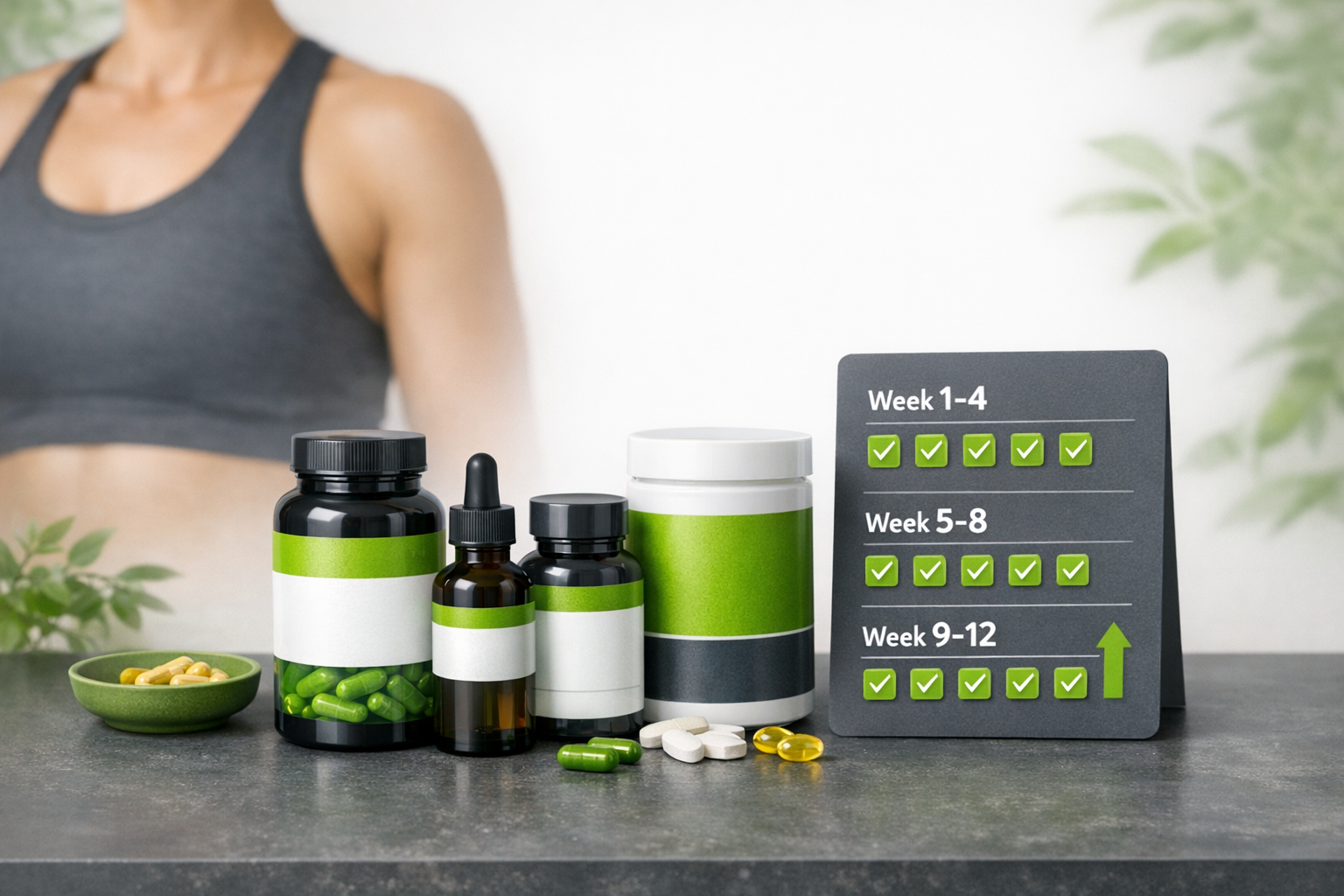
Follow this plan consistently for 8-12 weeks to start. During this time, observe any changes in energy, sleep quality, and performance.
5.4 Dosages: Staying within safe limits
Guidelines for healthy adults (without specific medical conditions):
- Vitamin D: German Nutrition Society recommendation when there is no own synthesis: 20 µg/day (800 IU). Higher doses only based on blood levels and under medical supervision.
- Vitamin B12: 4 µg/day as a reference. Supplements are usually dosed higher; what matters is having stable blood values.
- Magnesium: 300-350 mg/day in total (food + supplement). Higher long-term intakes only after consulting a health professional.
Tip: Calculate your overall intake from food + supplements. Multiple products may contain the same nutrient.
Step 6: Fit your plan into everyday life & avoid common mistakes
To prevent your supplements from ending up in the cupboard after two weeks, structure is key:
- Anchor them to a fixed routine (breakfast, lunch, evening routine).
- Use a weekly pill organizer or app reminders.
- Take supplements with meals - this usually improves tolerance and absorption.
Avoid this mistake: Taking lots of different single-ingredient products with no overview. Better: a few well-thought-out products with clear labeling and tested quality.
Other common pitfalls:
- "Pills instead of lifestyle" - supplements do not replace exercise, sleep, or stress reduction.
- Impatience - don't expect overnight results. Give your body 4-8 weeks.
- No follow-up testing - with longer-term use of vitamin D, iron, or high-dose B vitamins, blood tests are advisable.
Quality matters. nextvital focuses on "Made in Germany", lab-tested batches, and transparent information about raw materials - a standard we endorse at Praxiswissen Gesundheit.
Next steps: How to stay energized all the way into summer
- Start now in spring with an honest energy check.
- Stabilize your diet and establish regular meals.
- If fatigue persists, have your lab values checked.
- Develop a simple, realistic supplement plan for 8-12 weeks.
- Review regularly: How are your energy, sleep, mood, and performance changing?
If you'd like support choosing the right key nutrients and interpreting your lab results, you can use the structured online initial consultation ("quick check up") from nextvital. The focus includes gut health, hormones, energy, and children's health. This way, you take a well-founded, transparent, and practical approach to enjoying a high-energy summer.
FAQ: Common questions about spring supplementation
Do I even need supplements in spring if I eat a healthy diet?
Not necessarily. A balanced diet usually covers your vitamin and mineral needs. However, data show that especially for vitamin D, many adults in Germany have low levels, particularly in winter and spring[9]. Whether additional supplementation makes sense depends on your lifestyle, symptoms, and lab results.
When is the best time to start a spring supplement routine?
The ideal time is spring (March/April). At this point, you benefit from longer daylight hours and rising temperatures. In principle, you can start at any time - the crucial point is having a structured approach instead of randomly combining products.
How long should I take supplements to get "summer fit"?
Plan at least 8-12 weeks for your supplement plan. Over that period, you can meaningfully assess effects on energy, sleep, and performance. If a deficiency has been documented, longer use under professional supervision may be necessary. After that, it's best to decide on the next steps together with a health professional.
Can I take several products at the same time?
Yes, but with a clear system:
- Check which nutrients are contained at which doses.
- Do not consistently exceed 100% of the NRV without medical guidance, especially for iron and fat-soluble vitamins.
- Prefer high-quality combination products with sensible doses instead of many single-ingredient supplements.
Are high-quality, lab-tested products really necessary?
They matter particularly when you're supplementing in a targeted way over a longer period:
- independent lab testing provides assurance about content and purity,
- "Made in Germany" and standards like the Cologne List® are important trust signals - especially in sports, where freedom from banned substances is crucial.
This is how you ensure that your supplements provide natural, tested support for a high-energy summer.